In the world of international journalism, few names have become as recognizable as Hugo Bachega. As viewers tune in to BBC News coverage from conflict zones across the Middle East, they often wonder about the man behind the distinctive accent and fearless reporting. The question “What is Hugo Bachega’s nationality?” has become one of the most searched queries about this accomplished journalist, revealing a fascinating story of cultural identity, professional excellence, and global citizenship.
What Nationality Is Hugo Bachega
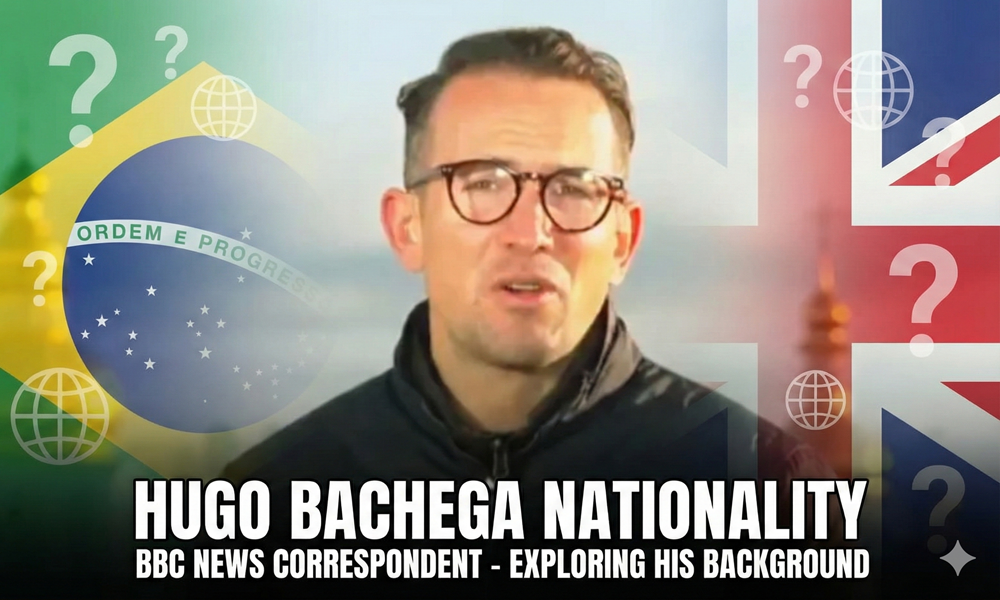
Hugo Bachega holds dual nationality: Brazilian and British. Born in São Paulo, Brazil, Bachega’s Brazilian heritage forms the foundation of his cultural identity and worldview. His journey from Brazil to becoming one of the BBC’s most prominent correspondents exemplifies the increasingly global nature of modern journalism.
While his Brazilian roots are unmistakable—evident in his distinctive accent that viewers have come to recognize—Bachega later acquired British nationality, reflecting his long-term professional integration into the United Kingdom’s media landscape. This dual-national status is not merely a bureaucratic detail; it represents a unique blend of perspectives that enriches his journalism and allows him to bridge cultural divides in his reporting.
The Brazilian Foundation: Where It All Began
Early Life in São Paulo
Hugo Bachega was born and raised in São Paulo, Brazil’s largest city and a vibrant hub of culture, politics, and social dynamics. Growing up in Brazil during a period of significant political and economic transformation provided Bachega with firsthand exposure to complex social issues, democratic processes, and the challenges facing developing nations.
Brazil’s rich cultural tapestry—marked by diversity, economic disparities, and passionate political discourse—played a crucial role in shaping Bachega’s journalistic perspective. The country’s history of navigating between democracy and authoritarianism, coupled with its ongoing struggles with inequality and social justice, likely fostered his early interest in current affairs and storytelling.
Educational Background
Bachega pursued his education in Brazil, studying at the Pontifical Catholic University of São Paulo, where he focused on media studies. This academic foundation equipped him with the critical thinking skills and theoretical knowledge necessary for understanding complex political and social phenomena. His education combined communication theory, international affairs, and cultural understanding—tools that would prove invaluable in his future career covering global conflicts and humanitarian crises.
The Brazilian Influence on His Reporting Style
The Brazilian cultural influence remains evident in Bachega’s work. Brazil’s tradition of socially conscious journalism, combined with its experience of covering corruption, political instability, and social movements, has informed his approach to reporting. He brings an understanding of developing world dynamics that many Western-born journalists might lack, allowing him to connect more authentically with communities in conflict zones and regions facing political upheaval.
The British Connection: Professional Integration
Transition to the United Kingdom
Bachega’s move to the United Kingdom marked a transformative phase in his career. While the exact timing of his relocation remains private, his acquisition of British nationality symbolized more than geographical relocation—it represented a commitment to global journalism and integration into one of the world’s most respected media institutions.
Working and living in the UK, particularly London, placed Bachega at the center of international journalism. The city’s role as a global media hub provided him with access to resources, networks, and opportunities that would define his career trajectory. His British nationality facilitated his work as a BBC correspondent, allowing him seamless travel and access to regions where British journalists are granted certain privileges.
BBC: The Platform That Defined His Career
Joining the BBC was a pivotal moment in Bachega’s professional life. The BBC’s commitment to impartial, accurate reporting aligned with his journalistic values, while the organization’s global reach provided him with platforms to cover stories that mattered most. His British nationality and association with British media institutions like the BBC demonstrate how integral the UK has become to both his career and personal identity.
The Significance of Dual Nationality in Modern Journalism

A Unique Perspective on Global Events
Bachega’s dual Brazilian-British nationality offers him a distinctive lens through which to view and report on international affairs. This bicultural identity allows him to:
- Understand multiple worldviews: His Brazilian background provides insight into Latin American and developing world perspectives, while his British identity connects him to Western European viewpoints.
- Navigate cultural complexities: The ability to relate to both Western and non-Western cultures makes him particularly effective when reporting from diverse regions.
- Bridge communication gaps: His dual identity helps him connect with sources and audiences from different cultural backgrounds, enhancing the depth and authenticity of his reporting.
Multilingualism as a Professional Asset
Bachega’s linguistic abilities directly stem from his dual nationality. He is fluent in Portuguese (his native language) and English, with working knowledge of Spanish and conversational Arabic. This multilingualism is a significant competitive advantage in international journalism:
| Language | Proficiency Level | Professional Application |
|---|---|---|
| Portuguese | Native | Covering Latin American stories, conducting interviews in Brazil |
| English | Fluent | Daily reporting for BBC, international communication |
| Spanish | Proficient | Coverage across Spanish-speaking regions, source engagement |
| Arabic | Conversational | Essential for Middle East reporting, direct source access |
Language proficiency is more than just translation—it provides access to nuances, cultural references, and authentic voices that monolingual reporters might miss. Bachega’s ability to conduct interviews in multiple languages allows him to bypass interpreters and capture more authentic, unfiltered perspectives.
Career Trajectory: From São Paulo to Beirut

Early Career at Reuters
Bachega began his journalism career as an intern at Reuters news agency in São Paulo. This experience in one of the world’s leading wire services provided him with rigorous training in fast-paced news gathering, fact-checking, and international reporting standards. At Reuters, he:
- Covered local and national Brazilian politics
- Developed skills in breaking news reporting
- Learned to work under deadline pressure
- Gained exposure to international journalism standards
- Built a network within the global journalism community
His work as a political correspondent at Reuters demonstrated early promise, quickly catching the attention of international news organizations.
BBC Career Milestones
Bachega’s association with the BBC, which began around 2012, has defined his career. His roles and coverage areas have evolved significantly:
2012-2016: Building Expertise
- Joined BBC as a political correspondent
- Covered various international stories
- Developed expertise in conflict reporting
2013-2014: Middle East Focus
- Based in Cairo, Egypt
- Covered Egyptian protests and political unrest
- Reported on the 2014 Constitutional referendum
- Witnessed and reported President Mohamed Morsi’s removal from Tahrir Square
- Covered the violent dispersal of pro-Morsi demonstrations
2016: Olympic Coverage
- Part of the BBC team covering Rio Olympics
- Provided daily live coverage from his home country
- Demonstrated versatility beyond conflict reporting
2022: Ukraine Coverage
- Reported from Lviv and Kyiv during Russian invasion
- Delivered first live broadcast from Lviv in March 2022
- Experienced explosions during live reporting, showcasing professionalism under extreme pressure
2023-Present: Middle East Correspondent
- Based in Beirut, Lebanon (from November 2023)
- Covers Israel-Palestine conflict, Lebanese politics, regional developments
- Reports on Hezbollah, humanitarian crises, and geopolitical tensions
The Distinctive Accent: A Mark of Identity
One of the most frequently searched topics about Bachega is his accent. Viewers often ask, “What accent does Hugo Bachega have?” or “Is Hugo Bachega British?”
The Brazilian Accent
Bachega’s accent is unmistakably influenced by his Brazilian Portuguese roots. Despite years of speaking English professionally and living in the UK, subtle traces of his Brazilian background remain evident in his pronunciation and intonation. This accent:
- Adds authenticity: His distinctive voice makes him immediately recognizable to viewers
- Reflects his heritage: It serves as a constant reminder of his Brazilian origins
- Demonstrates diversity: It showcases the BBC’s commitment to hiring correspondents from varied backgrounds
- Humanizes reporting: His accent adds a personal touch that connects with audiences
Rather than attempting to completely neutralize his accent, Bachega has embraced it as part of his professional identity. In an age of globalized media, his accent represents the increasingly multicultural nature of international journalism.
Notable Coverage and Reporting Highlights
Middle East Expertise
As the BBC’s Middle East correspondent, Bachega has covered some of the region’s most significant and dangerous stories:
Lebanese Politics and Hezbollah
- Produced the BBC documentary “Hezbollah in Trouble”
- Provided nuanced analysis of Lebanon’s complex political landscape
- Reported from southern Lebanon during Israeli strikes
- Covered the Lebanese army’s takeover of Hezbollah-dominated areas
Israel-Palestine Conflict
- Extensive coverage from Gaza
- Reported on humanitarian crises affecting Palestinian civilians
- Covered Israeli military operations
- Provided balanced reporting on one of the world’s most contentious conflicts
Regional Humanitarian Issues
- Migration crises in the Middle East
- Human rights violations
- Impact of war on civilian populations
Conflict Zone Reporting
Bachega’s career has been defined by his willingness to report from dangerous locations:
Syria
- Covered the Syrian refugee crisis
- Reported on the humanitarian catastrophe
- Documented the impact of civil war on civilians
Ukraine
- On-ground reporting during Russian invasion
- Maintained composure during missile attacks
- Provided critical eyewitness accounts of the war’s impact
Egypt
- Documented the Arab Spring aftermath
- Covered political transitions and military interventions
- Reported on crackdowns against opposition groups
Public Perception and Professional Recognition
Awards and Accolades
While specific award details are not extensively publicized, Bachega has received recognition for his conflict journalism. His exceptional ability to convey complex stories in accessible ways has earned him respect among peers and audiences alike.
Social Media Presence
Bachega maintains an active presence on social media platforms, particularly Twitter (X) and Instagram, where he is identified as BBC Middle East correspondent. Through these channels, he:
- Shares behind-the-scenes insights into his reporting
- Highlights stories that might otherwise go unnoticed
- Connects directly with audiences globally
- Provides real-time updates from conflict zones
With over 16,000 followers on Twitter, his social media presence extends his reach beyond traditional BBC broadcasts.
Viewer Trust and Recognition
Audiences worldwide have come to trust Bachega’s reporting for several reasons:
- Composure under pressure: His ability to remain calm during dangerous situations
- Cultural sensitivity: His multicultural background enables nuanced reporting
- Human-centered storytelling: He focuses on the human impact of conflicts, not just political maneuvering
- Linguistic authenticity: His ability to conduct interviews in multiple languages without interpreters
Personal Life: Privacy and Professional Boundaries
Maintaining Professional Discretion
Unlike many public figures, Bachega maintains a relatively private personal life. This discretion is common among correspondents working in conflict regions, where security concerns and professional integrity often necessitate boundaries between public and private spheres.
Marriage and Family
According to some reports, Bachega is married to Kavita, and their wedding took place at Euridge Manor in the Cotswolds in a multicultural ceremony that reflected his diverse background. However, he rarely discusses his personal relationships publicly, focusing instead on his professional work.
Current Residence
Bachega currently resides in Beirut, Lebanon, where he is based as the BBC’s Middle East correspondent. This location serves as a strategic hub for covering developments across the broader Middle East region.
The Broader Impact of Nationality on Journalism
Diversity in News Organizations
Bachega’s presence at the BBC represents a broader trend toward diversity in international journalism. News organizations increasingly recognize that correspondents from varied backgrounds bring:
- Different perspectives and insights
- Cultural understanding that enhances reporting quality
- Ability to connect with diverse audiences
- Linguistic skills that provide access to sources
Representing Multiple Communities
As a Brazilian working for British media, Bachega serves multiple communities:
For Brazilians: He represents a success story—a Brazilian journalist who achieved prominence on the world stage, demonstrating that talent and dedication can transcend geographical boundaries.
For British audiences: He exemplifies the BBC’s commitment to global perspectives and diverse voices in journalism.
For global viewers: He embodies the modern global citizen—adaptable, multicultural, and capable of bridging different worlds.
Lessons from Bachega’s Journey
For Aspiring Journalists
Bachega’s career offers several valuable lessons:
- Linguistic skills matter: Invest in learning multiple languages
- Cultural understanding is crucial: Embrace diverse experiences and perspectives
- Dedication to craft: Excellence requires consistent hard work and professional development
- Courage and integrity: Reporting from conflict zones requires both physical bravery and journalistic ethics
- Adaptability: Be willing to work in different environments and under challenging conditions
For Understanding Modern Media
Bachega’s success illustrates important trends in contemporary journalism:
- The value of diverse newsrooms
- The importance of on-ground reporting in an era of digital news
- The continued relevance of traditional media organizations like the BBC
- The global nature of modern news coverage
Frequently Asked Questions About Hugo Bachega’s Nationality
Is Hugo Bachega Brazilian or British? He is both. Bachega holds dual Brazilian-British nationality, born in Brazil and later acquiring British citizenship.
Does Hugo Bachega have a Brazilian accent? Yes, his accent reflects his Brazilian Portuguese background, though he speaks fluent English after years of professional broadcasting.
Where was Hugo Bachega born? He was born in São Paulo, Brazil.
Why does Hugo Bachega work for the BBC? His professional excellence, multilingual abilities, and expertise in international affairs made him an ideal candidate for the BBC’s global journalism team.
What languages does Hugo Bachega speak? He speaks Portuguese (native), English (fluent), Spanish (proficient), and conversational Arabic.
Conclusion: A Global Citizen in Journalism
Hugo Bachega’s dual Brazilian-British nationality is far more than a biographical detail—it represents a confluence of cultures and perspectives that make him uniquely suited to international journalism. His Brazilian roots provide understanding of developing world dynamics and cultural diversity, while his British identity connects him to one of the world’s most respected media institutions.
As he continues reporting from Beirut and conflict zones across the Middle East, Bachega’s dual nationality remains a professional strength. It allows him to approach stories with empathy, cultural sensitivity, and a truly global perspective—qualities desperately needed in contemporary journalism. His reporting provides not just facts and analysis, but a bridge between different worlds, embodying the future of journalism: diverse, multilingual, culturally aware, and committed to telling human stories from every corner of the globe.