
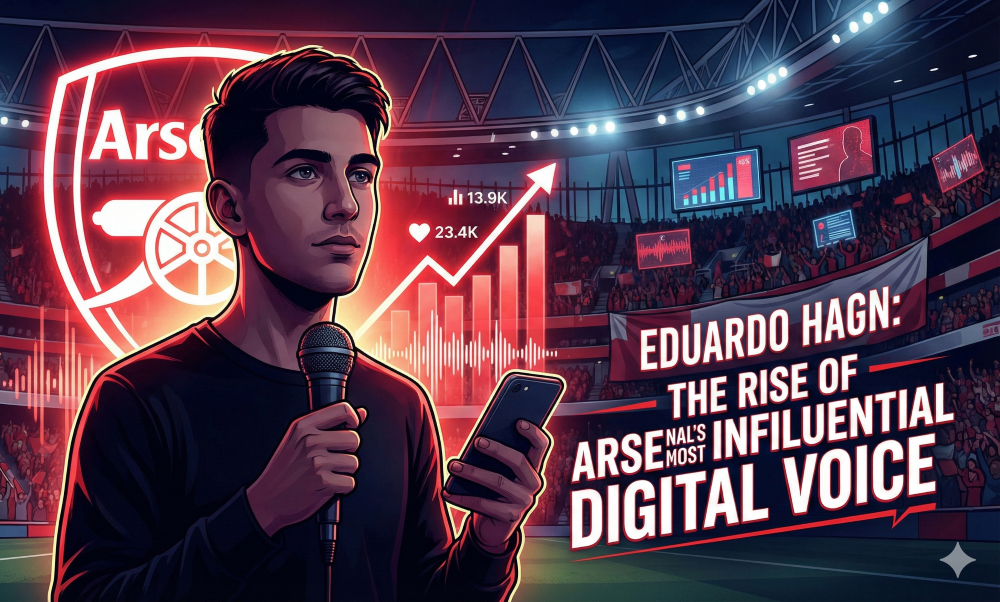
Ever scrolled through Arsenal Twitter during a transfer window and seen someone breaking news before the big outlets? There’s a good chance it was Eduardo Hagn. This 24-year-old Chilean journalist has quietly built something pretty remarkable—a bridge between old-school sports journalism and the lightning-fast world of social media, all while studying at university and passionately supporting the Gunners.
Let me tell you why his story matters to anyone who cares about where sports media is heading.
Quick Facts About Eduardo Hagn:
- Age: 24 years old
- Nationality: Chilean (based between Chile and USA)
- Education: Journalism & Business Administration, University of Chile
- Platform: Primarily X (Twitter), also Instagram and Threads
- Followers: 380,000+ across platforms
- Club Focus: Arsenal FC
- Media Affiliations: ESPN Chile, Polymarket Sports
- Achievement: Top 500 Most Influential X Accounts (2023)
The Unconventional Path to Football Journalism
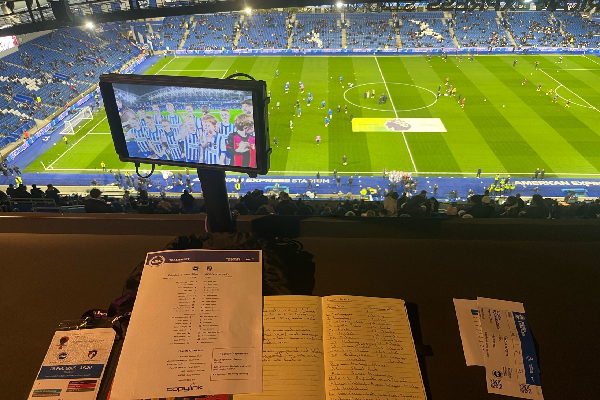
Most sports journalists follow a predictable route: journalism degree, local paper internship, work their way up to major outlets. Eduardo Hagn? He basically flipped that script.
Born and raised in Chile—a country where football isn’t just a sport but practically a religion—Hagn grew up breathing the game. But here’s what makes him different: instead of just pursuing journalism, he studied Business Administration alongside his journalism degree at the University of Chile. That might seem like an odd combination at first, but think about modern football for a second. Transfer fees hitting €100 million, complex wage structures, FFP regulations—the game is as much about spreadsheets as it is about spectacular goals.
This dual background gave Hagn something most fan accounts lack: the ability to understand not just what happens in football, but why it happens from a business perspective.
Building an Audience One Tweet at a Time
Here’s where things get interesting. While still a student, Hagn started sharing his Arsenal takes on X (formerly Twitter). Not just emotional fan reactions—though he’s definitely passionate—but genuinely insightful analysis mixed with rapid-fire news updates.
His approach worked because it felt authentic. He wasn’t pretending to be some neutral observer sitting in a glass booth. He’s an Arsenal supporter who happens to have journalistic training and business know-how. That transparency? It actually built trust rather than diminishing it.
Key milestones in his digital rise:
- Started sharing football insights on social media platforms while studying
- Gained traction through consistent Arsenal coverage and tactical breakdowns
- Recognized as one of the Top 500 Most Influential Accounts on X in 2023
- Grew to over 380,000 followers across platforms
- Connected with ESPN Chile and Polymarket Sports
The numbers tell part of the story, but what really stands out is how he built this following. No clickbait, no fake outrage for engagement—just consistent, informed commentary delivered with genuine passion.
The ESPN Connection: Straddling Two Worlds

Now, about that ESPN Chile relationship everyone asks about. Hagn isn’t a full-time ESPN employee in the traditional sense. He contributes analysis, appears in their coverage, and collaborates on content—but he maintains his independent voice on social media.
This hybrid model is actually brilliant, and it might just be the future of sports journalism.
| Traditional Journalism | Eduardo Hagn’s Approach | Why It Works |
|---|---|---|
| Tied to editorial policies | Independent social presence | Authentic voice retained |
| Scheduled publishing times | Real-time updates | First to breaking news |
| Institutional voice | Personal brand | Direct fan connection |
| Geographic limitations | Global reach | Serves multiple audiences |
Think about it: He gets the credibility boost of being associated with a major network like ESPN, access to press conferences and insider sources, but he’s not handcuffed by corporate restrictions. When Arsenal news breaks at 2 AM, he can tweet it immediately. When he has a hot take about a tactical decision, he doesn’t need editorial approval.
That’s the kind of flexibility traditional journalists would kill for.
Arsenal Obsession: His Superpower and His Challenge
Let’s be real—Eduardo Hagn is deeply invested in Arsenal FC. His bio literally includes the Arsenal flag emoji. For some people, that raises questions about objectivity. Can you trust someone’s analysis when they’re emotionally invested in the outcome?
Here’s my take: his open Arsenal fandom is actually one of his strengths, not a weakness.
Why? Because he’s transparent about it. He’s not pretending to be neutral while secretly hoping the Gunners win. Everyone knows where he stands, which means you can filter his analysis accordingly. Plus, that deep knowledge of the club—the history, the playing philosophy, the transfer patterns—makes his insights richer than generic Premier League coverage.
What Makes His Arsenal Coverage Stand Out
- Tactical depth: He doesn’t just say “Arsenal played well”—he breaks down formations, pressing triggers, and positional rotations
- Transfer context: Understanding both the business side and sporting needs
- Historical perspective: Connecting current decisions to Arsenal’s broader trajectory
- Fan pulse: He knows what supporters are thinking because he’s one of them
That said, being this closely tied to one club comes with challenges. Some rival fans dismiss his analysis as biased. Other Arsenal supporters sometimes feel he’s too critical when things go wrong. And there have been moments of controversy—like when established journalist Charles Watts called him out for allegedly misrepresenting information.
These bumps are part of operating in the public eye, especially when you’re straddling the line between fan and journalist.
The Social Media Journalism Playbook
What can we learn from Eduardo Hagn’s approach? Whether you’re an aspiring sports journalist or just fascinated by how media is changing, his strategy offers some valuable lessons.
Speed matters, but accuracy matters more. Hagn has built his reputation partly on being quick with news, but he’s careful with sources. One false report can tank credibility built over years.
Engagement isn’t optional. He doesn’t just broadcast—he responds to followers, participates in debates, and creates a community feel. That interaction keeps people coming back.
Specialize deeply. Instead of trying to cover everything, he went all-in on Arsenal and Premier League analysis. That depth creates authority.
Embrace your perspective. Rather than hiding his fandom, he owns it while maintaining professional standards. That authenticity resonates.
Bridge cultures. Operating between Chile and the US, providing bilingual content, he connects different football communities. In today’s global game, that cultural translation is valuable.
The Criticism and Controversies
No profile would be complete without acknowledging the pushback. Some critics label Hagn as an “aggregator”—someone who repackages news from other journalists rather than breaking original stories. That’s a serious accusation in journalism circles.
There’s some truth to the concern. Social media journalism often involves curating and synthesizing information from multiple sources. The line between aggregation and reporting can get blurry. The question becomes: are you adding value through analysis and context, or just copy-pasting someone else’s work?
Hagn’s defenders point out that he provides tactical analysis, cultural context, and rapid synthesis that helps fans make sense of the flood of information. His critics say he sometimes shares speculative rumors without enough verification.
Both things can be true. Digital journalism is messy and evolving. The standards are still being written.
Where Does He Go From Here?
At 24, with hundreds of thousands of followers and growing media connections, Eduardo Hagn has options. Several potential paths:
Deeper media integration: Full-time role with ESPN International or another major outlet, potentially hosting shows or podcasts
Independent media brand: Launch his own subscription platform, YouTube channel, or podcast network with full creative control
Club-affiliated role: Transition into working directly for Arsenal or another club in their media operations
Traditional journalism: Move into long-form writing, investigative reporting, or documentary work
The smart money says he’ll continue the hybrid approach—maintaining independence while selectively partnering with established outlets. Why? Because that model gives him the best of both worlds: credibility through association plus freedom to maintain his authentic voice.
The Bigger Picture: What Hagn Represents
Here’s why Eduardo Hagn’s story matters beyond one person’s career: he represents a fundamental shift in how sports journalism works.
The gatekeepers are gone. You don’t need permission from a newspaper editor or TV network executive to build an audience anymore. If you have insight, consistency, and authenticity, you can create your own platform.
The audience decides who’s credible. Followers vote with their attention. Hagn has nearly 400,000 people who’ve decided his analysis is worth their time—that’s more than many traditional sports journalists can claim.
Passion and professionalism can coexist. For decades, journalism schools taught that objectivity requires emotional distance. Hagn proves you can be deeply invested in a team while still providing valuable, honest analysis.
Global barriers are collapsing. A student in Chile can become a go-to source for Premier League information for fans worldwide. Geography no longer determines who gets to participate in football conversation.
Final Thoughts
Eduardo Hagn isn’t perfect—he’s faced criticism and operates in the messy intersection of fandom and journalism. But that’s the point. He’s figuring out sports media in real-time, without a rulebook.
In a landscape drowning in hot takes, he’s found a way to be both fast and thoughtful, passionate and informed. For young journalists, his story proves there’s still room for new voices if you combine genuine expertise with authentic engagement. And for Arsenal fans? You’ve got someone who feels what you feel but can explain why it happened. That’s a rare combination.